Showing posts with label Tips. Show all posts

Opportunities

I don't usually post poetic meaningful rambles these days, so I thought I'd throw one your way. One about opportunities for grads.

Now I'd like to say I know everything. But even I know I don't. But I have enough hands in enough pies to be able to see things that from all sorts of angles.

1. Free publicity
There are plenty of ways to publicise yourself. For instance Bjorn and Sophie created 'Keep Aaron Cutting'. And Lewis and Alex got their website in the Metro, and you can too. I could reel off plenty more, but I'll let you do the leg work with links. But think of how to get publicity in Campaign, The Drum, Creative Review or the press. There are plenty of ways to go the extra mile for yourself. Find one. And then go nuts.
2. Networking
It's so easy. Yet so easily underestimated. Tweet people in your industry. Email others. Comment on blogs. Send round cool stuff. If you sound interesting, people will want to meet you. The worst thing you can do is overlook social networks, including LinkedIn.
You'll get loads of opportunities through networking. They might pass your folio on to people higher up, take you for drinks to meet other creative folk and getting book crits is easier too. The YCC have a 'Friends Of' section that also has plenty of names and emails on. Use it. That's what it's there for.

3. Reply to emails and quickly
Recently there was an opportunity I was in charge of. There was a call for submissions and then a change in plan. I emailed the 30 or so student teams that had already applied to tell them of the change in plans. And I needed a reply ASAP from them to confirm they were still interested. I got only 18 replies. And then 4 more after the deadline had passed, which meant they weren't considered. So 12 teams lost out on a fantastic opportunity purely on not reading / replying to an email.

4. Not being a knob
There are certain people that get a reputation for certain things. I'd like to think I can have an opinion and express this online without slagging off people. Others on the other hand, can't.
If you're a student / grad and are looking for work, the last thing you need to do is make enemies. The internet is actually a very small place. And word travels fast. Be careful what you say. If people ask others for opinions and they remember you for the wrong reasons, you're stuffed.

5. Not sitting on your arse waiting for 'something to come along'
If you've not got a placement / job yet, it's because you've not been looking hard enough. I run Ad Job Wall because there are lots of jobs out there that you guys should know about. But there are many more I don't put out there. Because I'm not going to them and pestering them. Go visit agencies, have book crits, do stuff that doesn't involve waiting for something to be handed to you on a plate.

6. Going where the work is
I've done this twice. And I know half the fun is going to a random city and trying something new. I started in London, went to Edinburgh because of point 5. Had far too much fun for two years. Headed back to London. Spent six months there and now I'm in Leicester.
I love seeing places and experiencing new things. And with no reason to stay in one place, I can make the most of great opportunities elsewhere. So what if there's a job in Newcastle or Birmingham? If it's your perfect role, go. Permanent doesn't mean a life sentence. Learn and, in time, move on. Follow your head, not your heart.

7. Take a step back
Think, is this really want you want? You don't have to find your dream job first time. In fact, it's probably impossible. But there are plenty of jobs out there that do similar roles but in different areas. I found a mate a PR role because journalism is having a tough time. Granted it's not 'the same' but it's close enough. It won't do her prospects or CV any harm. Whereas being on the dole or working in McDonalds could.

And finally, our new agency in Leicester, BIG Communications, is looking for a junior digital designer and an account exec. Drop me an email if you're interested. I've even just presented two opportunities to you just for simply by reading my blog. I'll say no more.

Creative portfolios

What do people look for in a portfolio?

The other week, this question was posed by @YCCLondon to a numbers of creatives. And they brought up some interesting answers.

@infernoagency: good ideas in interesting channels. Don't do headline/picture/logo approach.yawn. And don't worry if it's a bit rough.

@polliecreatives: Strategic thinking. Crazy shit. Personality. Lots of all 3.

@Sergethew: I'd say dip it in some PVA, then in some glitter, make it shiny! It's well known Creative Directors are descended from Magpies.

@emily_churches: YOU make a good portfolio. People buy into the person before they even consider the idea. Be likable.

@LBiLondon: one that blows the wind up your skirt!

@lendmeyoureyes: you only need two words: good ideas.

@andymarkpeel: Raw ideas, energy, a grasp of how things work and lots of weird shit that's not necessarily adverts.

@Wheres_My_Owl: I would say consistency an confidence. But equally make an impression being creative isn't all about advertising!

@Hellocreatives: Be selective, show the kind of work you want to do, don't just throw in everything from Uni. And 90% of any job is personality.

@Floheiss: ideasideasideasideasideasideasideasideasideasideasideasideasideasideasideasideasideasideasideasideasideasideasideasideasideasidea

@sophielovestea: I think being interesting, talented and enthusiastic is all that matters in the end?

@dbedwood: show you can write a good poster, show you can write in many tones of voice, show you try not to copy, show your balls.

@W2Optimism: Original, engaging ideas. Fresh thinking. Craft, story-telling and intelligence.

@Creative_Boom: Showcasing most recent work with clear navigation of About and Contact pages. Nothing too fussy! Let the content do the talking

@tommyjames: The question is flawed. What you're really asking is “How can I make my portfolio look more like everyone else’s, more like what’s expected?”

So ask the question, get the advice...and then do the complete opposite.

But the best point was:

@iamwilf: it's different for everyone, for me it's simplicity in the ideas and a bit of utility in there to boot!

It's amazing how many people mentioned 'you' being the difference. Very few said your book should look good. Nearly everyone wanted ideas, because they can teach you craft but not how to think.

Real work vs Spec work

I came to London with a book of ads that have run. And a few things that have never made it past the top drawer.

But now, after two weeks having meetings, my book has completely changed. Why? Because everyone wants to see how creative you are. Not how you fare with client restrictions or budgets.

I wouldn’t have three years experience if I couldn’t make an ad. So instead, I’m now creating spec work with big ideas that go beyond anything a brief could ever let me create.

At my stage, I always thought showing off work I’ve done was the best idea, which it would be if I’d created the meerkat or the latest Nike ad. But I haven’t.

So after seeking advice in the form of three very well respected and highly creative people, I’ve come to terms that my book of ads isn’t want creatives want. And that spec work was, and still is, the way forward.

The down side is though, now I know how to make an ad, a nice strap and clever visual just won’t do. These need to be bigger ideas. Ones that have a clear goal in mind. It’s like I’m the planner and creative on the job. But I don’t mind that, it just means it takes twice as long to find that little gem hidden away. And then make it.

Dribbble promotion

On the current theme of selling yourself better than others... I introduce to you Harry Roberts, a 20 year old web developer who's looking for freelance work. And by the looks of things, he's pretty good at what he does.

He runs csswizardry.com, which look slick and has gained himself a few thousand Twitter followers off the back of it. But, what impresses me more, is his dribbble page.


Plus, when you roll over each image, it gives you a nice bit of copy to read.


What's nice about this is that he's chosen a site that designers use on a daily basis. And where he can also showcase some of his work, which is pretty much his target market.

The good ol' fashioned A4 paper resumé may soon be a thing of the past by creativity's standards. Watch this space.

CVs

I’ve been having to write a CV recently. Usually my portfolio is my ticket to an interview, a meeting or a placement. So this is a new territory to me. And one that I’ve realised there’s a world of opportunity.

My CV has a fairly standard look about it. A brief summary about what I’ve done, where I’ve been and what I’m about. Then the technical stuff appears, which is all neatly designed. Nothing special I might add, but enough to show I care about design and that a plain word doc just won’t do.

Well, some designers have decided to take a different approach. There are a few creative CVs I’ve seen in the last few years that have caught my attention. And three of them were very recently.

First there was Ed Hamilton who decided to make his CV in Google maps. One useful thing was that he’s travelled the world, meaning the pins look rather impressive before even being clicked on.

Everything from places of work to education, it’s all on there. And all neatly adapted to the medium.

Graeme Anthony decided to create his CV on YouTube. The perfect way to get your CV to go viral. And it helps that it's very well done. I also love the idea of techies or film makers creating a fantastic looking CV in AfterEffects and letting their skills speak for themselves.


But the most recent interesting CVs have taken the form of infographics. The great thing about these are that they’re very visual, which is very useful if, like these two, you’re a graphic designer.

What’s also nice about these is that they look completely different to each other. They’ve put their own mark creatively on their CV meaning I’m almost not looking at their CV, I want to see their work.

But that’s not all...

Ways of getting your CV out there are taking on a whole new level too. From using Google Adwords to Facebook adverts, the clever people are trying different ways to get noticed.

Of course you need to back up the seeding with some solid facts, but they’re thinking has them ahead of anyone sending in just a standard CV on spec.
For me, I use Twitter, my blog and every other social network you can (nearly) think of to feed out my content. And to me, this are my living and breathing CV. Everything I’ve done, said or thought about is in here somewhere. You just have to go looking.

What's the easiest way to make an online portfolio?

Over the last few weeks, many people have asked me this question. And to be honest there are a few ways. But as a designer/copywriter/art director/creative team you're meant to be "creative" when it comes to how your online portfolio looks and/or works.

Obviously nowadays an online presence is vital. And anyone and everyone (that you need to show off to) has the internet. Meaning you can always show people your work without needing to be there.

In this post I'll attempt to take you through a few things that you should do. And ways to save you money by doing it too.

1. Custom URL.
Probably one of the best ways to market your team is by having your own unique web address. A something.tumblr.com or something.carbonmade.com just shows you haven't cared about the way you come across.

Custom URLs cost pennies. I'm talking £2.50 a year for .co.uk or a few more quid for a .com. Think about it. And have a look around too. For instance there's a DanAndAdam.com, not to be confused with AdamAndDan.com.

Two very different sites but both creative teams. This could be the difference between a rival team getting a page view by a Creative Director, our a rival getting one instead.

Obviously ours is wearecrap.co.uk, which helps with stand out. But we also have a reason for the name. Don't over egg yourself either. shithotcreativeteam.co.uk probably won't do you any favours in the short term.

2. Hosting.
This is my biggest annoyance. Everyone asks, where can I get decent hosting? The answer is. You don't need it.

I host this blog on blogspot and yet, without looking very hard (or in the source code), you'd never know.

There are so many blogging sites out there that will host a custom URL for you. And then if you know a bit of code. You can remove all knowledge of them hosting it.

Blogger and Tumblr are my favourites for this. Wordpress everyone will scream is better. And yes, if you know code, it is. But, if you want to use a custom URL on Wordpress, you need to buy hosting!

Behance offers a place where many designers have a site, but you can't add any creativity to your page. While Carbonmade, offers a great portfolio hosting site. But, it's just that you're limited to how you can show off your work.

There are more ways to showcase your portfolio here, but they all require a monthly fee or less creative ways to showcase your work.

3. Flash or not?

Now the reason I've mentioned the above sites is that they are all built using HTML. Not Flash. Don't get me wrong, Flash can be great. But it can also ruin a users experience. I've seen too many young team's sites that use Wix. I hate it. It ruins the whole purpose of Flash. It's trying to be obvious. And ends running slowly and making work look naff.

We use Flash, because we currently don't have the skills to produce the same in HTML5. The downside to our site is, you can't look it on an iPad and an iPhone. And, with more and more people getting these devices, it upsets me greatly when I try and look up someone online and get greeted with a blank page. That's why my personal portfolio site is in HTML, and built with Tumblr.

Yay... and nay.


If I've persuaded you to stick with HTML, go to point four.

4. How do I make blogging format a portfolio?
Simple. There's a range of "portfolio themes" out there. Just Google them for Tumblr or Blogger and see which one you like the look of.

My Tumblr uses Cargo Theme, but here's a lot more great themes for Tumblr. Blogger is slightly limited on great easy to implement themes. If you're good with code though, here's a few to get you going. My honest opinion is that Tumblr offers the easiest and best way to create a different looking portfolio. Without any technical knowledge.

5. Yes but how do I make a standard theme different?


Easy. In Tumblr there's a customise (to us brits) tab which then takes you to a range of pages that you can change just the way you want. 

In my theme, you can change the only a few things in appearance. But, I've always been one for simplicity and clean lines. 
Tumblr also makes it really easy to link loads of things too. As it's my hub of all things me, I've got links to all the other sites I'm on. Simple really.
Tumblr also makes it really easy to publish any new content you create. By linking up your Facebook and Twitter to your folio, you can let all your followers know you've added more work. Always a good thing in my opinion.
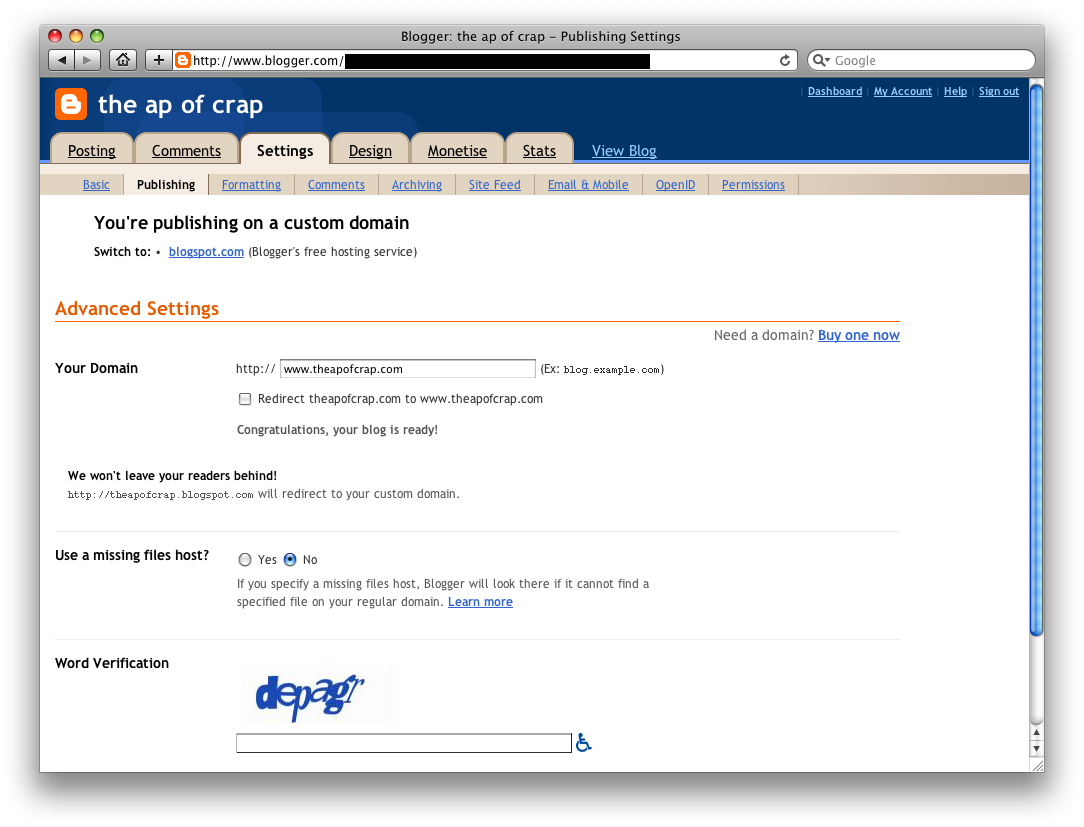
And finally, you add your title. description and change your something.tumblr.com to your custom domain. I bought andymarkpeel.co.uk and andymarkpeel.com from 1and1 for a mere £10(ish) for two years. These won't become active instantly. They'll take about 24 hours to be usable. Then to activate your own url, just go to point six.
6. Transfering your .tumblr.com to your own url.

If you're struggling, there's some helpful info here, but I'm hoping these screenshots will do nicely. I order my domains off 1and1, so firstly you need to edit your DNS settings.


Simply change your IP address/ A-record to 72.32.231.8 this will point your custom url at Tumblr.
Then head back to Tumblr and point your 'blog' at your custom url.
And hey presto. A freebie portfolio blog with your own custom name. And it won't cost a penny (other than renewing your domain name).
Hope that made sense. Give me a shout if you want any help.

Tips for Young Advertisers #5

I found this, it's bizarre how much is a pile of tosh. Your book is king, then network, then reap the rewards.


Making it in advertising is rewarding and challenging. But for many people just starting out, the challenge seems to be getting that first big break into an ad agency's door. There are many ways you can overcome that barrier and land a job at an advertising agency.


1. Intern 
Agencies look at interns as potential employees. If you have the opportunity to intern, by all means, you should.

Interning will help you get an "in" to the agency but you'll also be able to work in various areas you wouldn't otherwise. Speak up and let the agency know you're eager and willing to learn toget the most out of your internship. The experience you gain as an intern is invaluable and could lead to a permanent position.


2. Take an Entry Level Position 
It would be nice to walk right into a corner office with a view, plop down in your leather chair and start working with big name clients. Of course, it doesn't work that way in the real world.

Many people have successfully started their career in advertising by taking any job in an agency and working their way up. Don't be afraid to work outside of your job description. Get in there and learn everything you can. If you're unable to move up within that particular agency, you can still use that experience to get you a job somewhere else.


3. Freelance 
If you're interested in being a copywriter or graphic designer, consider freelancing as a way to get into the business. Coming up with your own rates, your own campaign to advertise yourself and approaching small businesses and even agencies are all tools you can use in your agency job hunt.


4. Create SPEC ADS 
SPEC ADS are simply your version of a published ad. You might think that you can do better than a major automaker's print ads running in your favorite magazine. Or your local barber shop's newspaper ads might need some reworking.


SPEC ADS are known in the industry as work you've done on your own. It's basically pretend copywriting or graphic design but if you have no published work, it's vital to showing your talent.


5. Contact Radio and Television Stations 
Many radio and TV stations have employees who specifically write commercials. They may also produce certain types of shows for the station. This is a great opportunity for you to get started in the business.

Since most radio and TV stations don't pay very much for these types of positions, there's both a high turnover and an opportunity for people with little or no experience to break into the field.


6. Schooling 
Getting an education in advertising doesn't just apply to college students. If you're serious about working in an agency, you can learn a lot by taking a course.


This doesn't necessarily mean you have to pack up and move to your closest advertising school. The Internet has given so many people the opportunity to learn about advertising and what it takes to make it in the business from the comfort of their own home.


7. Introduce Yourself 
If you're looking for a position on the creative side of advertising, write a letter to the Creative Director. Introduce yourself in a friendly, professional tone and give a brief bio.


Be sure you find out who the Creative Director is and not just address your letter: "To Whom It May Concern." You want to approach this person just as you would a friend so get their name and the spelling right.


You can follow up in a few weeks with an additional letter or you can give the Creative Director a call. Just don't cold call them first. Anyone in an agency is going to be busy and especially someone in a management position who is juggling many projects at once.


8. Network 
Look for opportunities to meet with people in your area that are actively working in the industry. Many cities have local advertising clubs that sponsor special events, educational seminars and professional workshops. Get out there and meet the people who could be your next potential employer.


9. Work in Sales 
There's a big difference between advertising and sales but being an account executive at a car dealership, for example, can help you bridge the gap between no experience and working in an agency.


10. Enthusiasm 
Are you passionate about working in advertising? Really passionate? Do you see commercials on TV and think:

"I could do so much better than that!"


Are you a hard worker that's willing to commit to the job, even when that means you're working well past the typical 9-5?


These are just some of the questions you have to really evaluate if you want to pursue a career in advertising. If you can honestly say, "Yes, absolutely," then you need to convey that to a potential employer.


Even in this day and age of hustle and bustle, employers are excited to see someone with genuine passion and enthusiasm. There's a reason they got into the field and your energy is a reminder of that.


People with a lot of experience have still been beaten out of the job by someone with less experience but a lot of heart.

Tips for Young Advertisers #5

Your portfolio, it will get you your first placement and job, but it will also develop upon seeing what others look like. On Friday we saw Craig and Paul and Blake and Will’s portfolios, these guys have been in the business 3-5 years and resemble our thinking, but obviously they are streets ahead at the moment, but we learnt so much off both of these 2 books.


Lesson #1

Your portfolio can be any shape size or colour and can have as many pages as it wants. They both had A3 coloured expensive ones rather than the St. Martins or Watford, whom when we see, are always A3 black boringness. We were the first team at Sunderland to go with the A4 plastic wallet, which everyone uses, these are great for carrying around but make yours stand out.


Lesson #2

What is in your book is up to you. Don’t let anyone say you need 3 press ads, 1 television spot and 1 other thing be it direct mail, ambient, web etc. 


P&C and W&B both had one offs, 1 print, no print, all television whatever the hell you want. We have always wanted reassurance that sometimes 3 prints ads just don’t appear, don’t have 1 great print and 2 shitty ones.


Lesson #3

Nail your strategy. An insight with a human benefit, something that says this product does what for me. 


People know chocolate tastes nice and makes you fat. 

But maybe Inuits eat it to stay warm, or you find a solid fact that it boosts your sex life. They are more interesting, but that’s only half the thought. Now you have to turn that thought into a nice endline. Not Cadbury’s makes you horny.


Lesson #4

Press and television ads should never be 3 of the same. If the press says the same message 3 times, just with a different picture, that’s not good enough. Find a way to say Chocolate make you horny three times. If you can’t just do 1 press ad.


Tips for Young Advertisers #4

C.R.A.P. have been told our website is:

“cool” - MCBD

“fun” - Scamp BBH

“something I’ve never seen before” - Nitro

“hilarious” - Lizh

and by 3 people, - Adam&Eve, Mother and MCBD

“have I met you before?” to which we reply, “no, but have you looked at the website?”


This brings me to my point. At present we trawl around agencies with our portfolio. The website is a great icebreaker we tag on the end of our email message. It means we can also not drag anything around that requires charging. But most of all, it makes us accessible to everyone.


Sam a head hunter a Lizh said that digital portfolios are brilliant and are the way forward.

A website, however bad you are at web design is a must, there are numerous websites out there that you can create them on. Even Flickr as a last resort, but don’t use Facebook as your only platform, just a starter for 10.


Some sites I know of:

Carbonmade - nice look, Brownmann use it

Fasthosts - host our site well enough for under a fiver a month

Figdig - half decent looking builder

Coroflot - more Flickr like hosting


Happy playing.

Tips for Young Advertisers #3

The Do and Don’ts of your portfolio

If you don’t know already there is a team out there called Wal and Jai, who have more successful blog than me and are probably the most well know placement team on the London circuit. The other day they were at Cream, a place for young teams to show off their work.

They have been there 2 years running and have been on placements at Wieden + Kennedy, Leo Burnett and Adam and Eve just to name a few, but finally they have got around to revealing their portfolio to the big bad world. And I’m not as impressed at I should be.

If you study the 2 pictures here (2007) and here (2008), the work they have put up is almost the same. Now I’m not one to point out the obvious, but, they haven’t come very far in that time. The TFL work won a D&AD Student pencil 2 years ago and the rest looks familiar.

This is my point, and we’re guilty of this too, always keep changing your book. Our Flymo work has been in there too long and everything else is no older than a couple of months.

If you go see the same team for another book crit, make sure at the very worst you only have 1 campaign they have seen before, otherwise what is the point in getting their view on your work? It’ll be the same as before and no help to you at all.

Change your book, keep it fresh, take it in a pizza box then print it on a t-shirt next time. It doesn’t matter. Just don’t let people you’re going to see feel like you’ve wasted their time more than once.


Keep the faith.

Tips for Young Advertisers #2

The Watford course run by Tony Cullingham, wants you to be creative in your application form.
(my attempts in comments section...off the top of my head)

COPYWRITING/ART DIRECTION TEST 2008/2009.

(1) Invent a new rule of physics, draw it so an idiot can understand it.

(2) Devise a new fruit and write a campaign for it.

(3) Devise a poster campaign to get Davina McCall elected as our next Prime Minister.

(4) Why should you never underestimate a handsome bear?

(5) What can you actually see in the light at the end of the tunnel?

(6) Why?

(7) I love my cat. Make me want to eat it.

(8) Enclose a reference about you written by a celebrity.

(9) Write headlines for T shirts to be worn the day after Armageddon.

(10) Sell Everest double glazing with posters that are purely visual. No word, no logo

(11) Enclose A4 photocopies of your own advertising ideas.

Tips for Young Advertisers #1

Our university starts again this week, and for those that are new or want a refresh, read this below by Russell Davies (whom you often see in Campaign). Basically this will keep you ticking over. I wouldn't say you had to do everything, but do atleast 1. I do point 1, 2 and 3 obsessively and have blogged about point 7
 

1• Take at least one picture everyday.
Post it to flickr. You should carry a camera with you. A phonecam will do. The act of carrying a camera and always keeping an eye out for a picture to take changes the way you look at the world. It makes you notice more things. It keeps you tuned in.

Posting it to flickr (or other photosharing sites) means that you’re sharing it. It’s in public. This will make you think a little harder about what you shoot, and it might draw you into conversation about your pictures.

2 • Start a blog.
Write at least one sentence every week. It’s easy to knock blogging as a kind of journalism of the banal, but in some ways that’s its strength. Bloggers don’t go out and investigate things (mostly); they’re not in exciting or glamorous places; they’re not given a story but have to build one out of the everyday lives they lead. And this makes them good at noticing things, things that others might not have seen. Being a blogger and feeling the need to write about stuff makes you pay attention to more things, makes you go out and see more stuff, makes you carry a notebook, keeps you tuned in to the world.

3 • Keep a scrapbook.
I’ve talked about this before. It’s good. Do it.

4 • Every week, read a magazine you’ve never read before.
Interesting people are interested in all sorts of things. That means they explore all kinds of worlds; they go places they wouldn’t expect to like and work out what’s good and interesting there. An easy way to do this is with magazines. Specialist magazines let you explore the solar system of human activities from your armchair. Try it; it’s fantastic.

5 • Once a month interview someone for 20 minutes.
Work out how to make them interesting. Podcast it. Again, being interesting is about being interested. Interviewing is about making the other person the star and finding out what they know or think that’s interesting. Could be anyone: a friend, a colleague, a stranger, anyone. Find out what’s compelling about them. Interviewing stops you butting in too much and forces you to listen. Good thing to practice. (And it’s worth noticing the people who are good at it.) Podcasting is sharing. Sharing is something you must get used to.

6 • Collect something.
It could be anything. It could be pictures of things. But become an expert in something unexpected and unregarded. Develop a passion. Learn how to communicate that to other people without scaring them off. Find the other few people who share your interest. Learn how to be useful in that community.

7 • Once a week sit in a coffee-shop or cafe for an hour and listen to other people’s conversations.
Take notes. Blog about it. (Carefully). Take little dips in other people’s lives. Listen to their speech patterns and their concerns. Try and get them down on paper. (Don’t let them see. Try not to get beaten up.) Don’t force it; don’t hop from table to table in search of better eavesdropping, just bask in the conversations that come your way.

8 • Every month write 50 words about one piece of visual art, one piece of writing, one piece of music, and one piece of film or TV.
Do other art forms if you can. Blog about it.

If you want to work in a creative business (and before long most businesses will be creative businesses), you’ll have to get used to having a point of view on artistic stuff. Even if it’s not very artistic. You’ll have to be comfortable with expressing an opinion on things you don’t know how to make or do, like music or writing. You get better at that through practice. And through sharing what you’ve written.

9 • Make something.
Do something with your hands. Create something from nothing. It could be knots; it could be whittling, Lego, cake or knitting. Take some time to get outside your head. Ideally, make something you have no idea how to do. People love people who can make things. Making’s the new thinking. Share your things on your blog, or, if you’re brilliant, maybe you can share them on
etsy.

10 • Read.
Great places to start:
Understanding Comics
by Scott McCloud
The Mezzanine
by Nicholson Baker
The Visual Display of Quantitative Information
by Edward Tufte

All these books are good for their own reasons, but they’re also good examples of people who are really interested in stuff that others think of as banal and who explain it in a way that makes you share their passion. That’s good.

And that’s it.